
Recurring Expense Governance for SaaS-Heavy Teams
Track recurring SaaS subscriptions, renewal dates, and cancel-by deadlines in one place — with clear ownership so auto-renewals don’t slip through.
Built for teams managing 15–100 SaaS subscriptions.
Why Recurring Expense Governance Matters
Recurring expenses rarely create risk when they are approved.
Risk accumulates between renewals — through unnoticed seat expansion, buried notice periods, and unclear ownership.
As subscription layers grow, recurring commitments become structural financial exposure — not just operational tooling.
Without structured governance, renewals happen by default instead of by decision.
What governance prevents
• Seat drift that quietly compounds cost
• Missed decision windows and auto-renewals
• Fragmented ownership across teams and vendors
Governance turns recurring spend into a controlled system — with clarity on who owns what and when decisions happen.
Explore the Renewal Governance Framework
Start with visibility, then add review discipline and renewal control.
A Single Missed SaaS Renewal Can Lock $10,000 Overnight
Common in annual SaaS contracts with 30–90 day notice periods.
Most teams don’t overspend because SaaS tools are expensive.
They overspend because renewal timing isn’t actively managed.
When notice periods are missed, contracts auto-renew by default — locking another year of recurring spend.
A missed annual renewal can lock $8,000–$15,000 for another year — not because of pricing, but because of timing.
Recurring expense examples include SaaS tools, infrastructure services, marketing platforms, and operational software contracts used across growing teams.
ExpenseCycle Brings Structure to Recurring Expenses
ExpenseCycle is renewal governance software built for teams managing 15–50 recurring subscriptions.
A lightweight system that makes renewal timing visible and actionable — without adding procurement bureaucracy.
How It Works
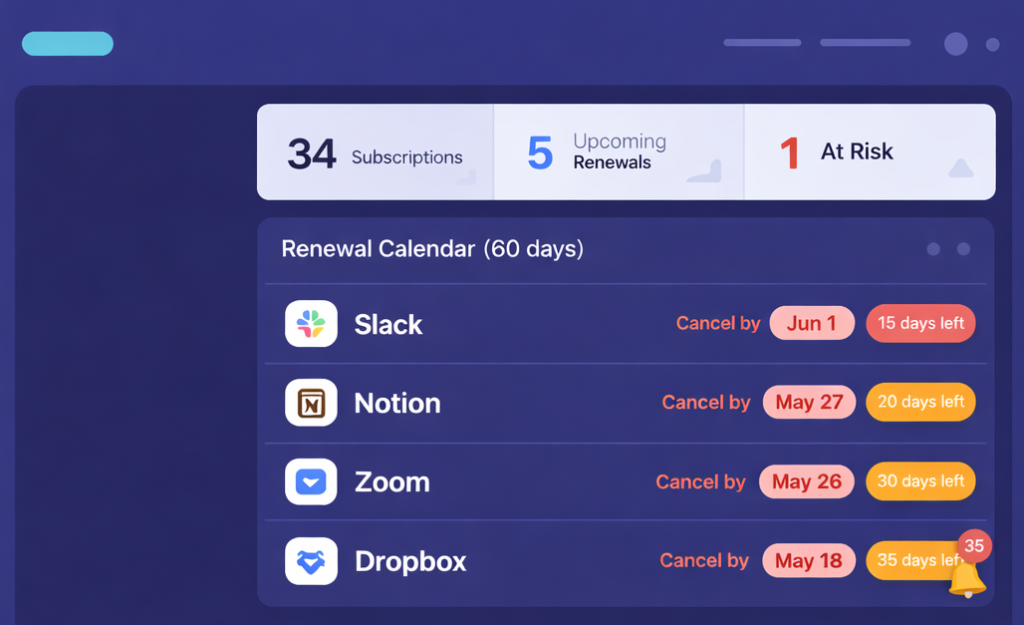
A lightweight renewal governance system: register contracts, make cancel-by dates explicit, and review upcoming renewals weekly.
Who ExpenseCycle Is For — And Who It’s Not
Renewal Tracking: Spreadsheet vs Calendar vs ExpenseCycle
Spreadsheets list tools. Calendars store dates. Renewal governance needs timing logic and ownership.
| Capability | Excel | Calendar | ExpenseCycle |
|---|---|---|---|
| Single source of truth | Manual | Fragmented | Centralized |
| Cancel-by logic | Manual | Date-only | Automatic |
| Owner accountability | Rarely | No | Assigned |
| Upcoming renewal visibility | Manual | Manual | Structured renewal timeline |
ExpenseCycle focuses on timing control — renewal deadlines, cancel-by dates, and ownership — before contracts auto-renew.
Early Access Pricing.
Lock in founding access while we ship the full automation layer.
Save 51% – Limited to the first 100 founding teams.
No contracts. Cancel anytime.
Future price
€39 / month
Early Access
€19 / month lifetime
“Lifetime” means your early access monthly price stays the same as we evolve the product.
Recurring expense management is not about cutting tools — it is about controlling renewal timing, contract ownership, and structural financial exposure.
As recurring expenses expand across teams and billing cycles, organizations need clear visibility into cancel-by dates, annual exposure, and seat growth dynamics.
ExpenseCycle provides a lightweight governance layer that prevents automatic renewals and ensures recurring commitments remain deliberate — not default.